
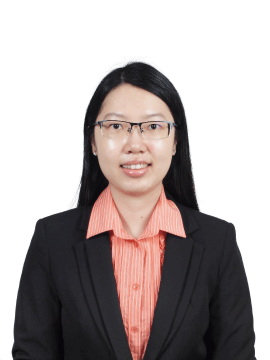
Course co-ordinator(s): Dr Audrey Repetti (Edinburgh), Samar Ibrahim (Dubai), Dr Teoh Wei Lin (Malaysia).
Aims:
- To develop an understanding of standard statistical techniques applied in the sciences including confidence intervals, hypothesis tests, and regression models
- To develop proficiency in applying these methods in the analysis of experimental data using the statistical software package Minitab.
Detailed Information
Course Description: Link to Official Course Descriptor.
Pre-requisite course(s): F17XA Mathematics for Engineers and Scientists 1 & F17XB Mathematics for Engineers and Scientists 2 .
Location: Dubai, Edinburgh, Malaysia.
Semester: 2.
Syllabus:
Data Summary: Plots, Histograms, Mean, Median, Standard Deviation, Quartiles
Probability: Rules of Probability, Conditional Probability, Bayes Theorem, Independence, Tree diagrams
Random variables and special distributions: Discrete and continuous random variables, expected value and variance, Binomial, Poisson, Geometric, Uniform, Exponential, and Normal random variables.
Sampling distributions and the Central Limit theorem with applications
Parameter estimation: Introduction to Method of Moments estimation, Maximum Likelihood estimation, and Method of Least Squares Estimation with examples
Confidence Intervals for: Population mean, population variance, population proportion, and two-sample confidence intervals for difference between population means and ratio of population variances.
Hypothesis Testing: Theory of classical fixed level hypothesis testing, P-values and their interpretation, standard hypothesis tests for mean, variance, population proportion, Poisson mean, difference between population means for independent populations and for paired data, relationship between testing and confidence intervals.
Regression: Simple linear regression, model fitting and checking, confidence intervals for parameter estimates, correlation, introduction to multiple regression
Chi-square tests: Goodness of Fit, Contingency tables.
Learning Outcomes: Subject Mastery
After studying this course, students should be able to:
- Understand the application of statistical testing and regression in a scientific context
- Use their statistical expertise to draw valid conclusions from experimental data
- Apply statistical methods to investigate practical problems in a scientific context
Learning Outcomes: Personal Abilities
After studying this course, students should be able to:
- Demonstrate facility with an appropriate statistical package
- Demonstrate an appreciation of the scientific problems to which statistical methods can be applied
- Manage time in order to meet report deadlines and to discuss statistical problems confidently with peers and colleagues
- Present results from a statistical analysis in a way that demonstrates that they have understood the technical and broader issues of statistical methodology as applied in practical situations
Assessment Methods: Due to covid, assessment methods for Academic Year 2020-21 may vary from those noted on the official course descriptor. Please see the Computer Science Course Weightings and the Maths Course Weightings for 2020-21 Semester 1 assessment methods.
SCQF Level: 8.
Credits: 15.
Other Information
Help: If you have any problems or questions regarding the course, you are encouraged to contact the lecturer
VISION: further information and course materials are available on VISION