Research
Our research spans fluid mechanics across environmental, engineering, and biological systems. Using analytical modelling, numerical simulation, and laboratory experiments, we explain and predict flows where intuition and standard models fall short — with vortices a recurring mechanism throughout.
This includes the aerodynamics of seed flight, the behaviour of drops, bubbles, and liquid bridges, wave-structure interaction in coastal and offshore environments, and the wave-driven transport of ocean microplastics. Recent work has focussed particularly on the interaction between waves, marine structures, and the seabed, with applications to seabed instability, structural loading, and failure under extreme conditions.
Theme A
Vortex-dominated flows
Vortices are a unifying theme in much of our work, especially in flows where surprisingly efficient transport or locomotion emerges from subtle fluid-mechanical mechanisms. We study how vortex structures govern biological flight, wake dynamics, and transport in natural systems.
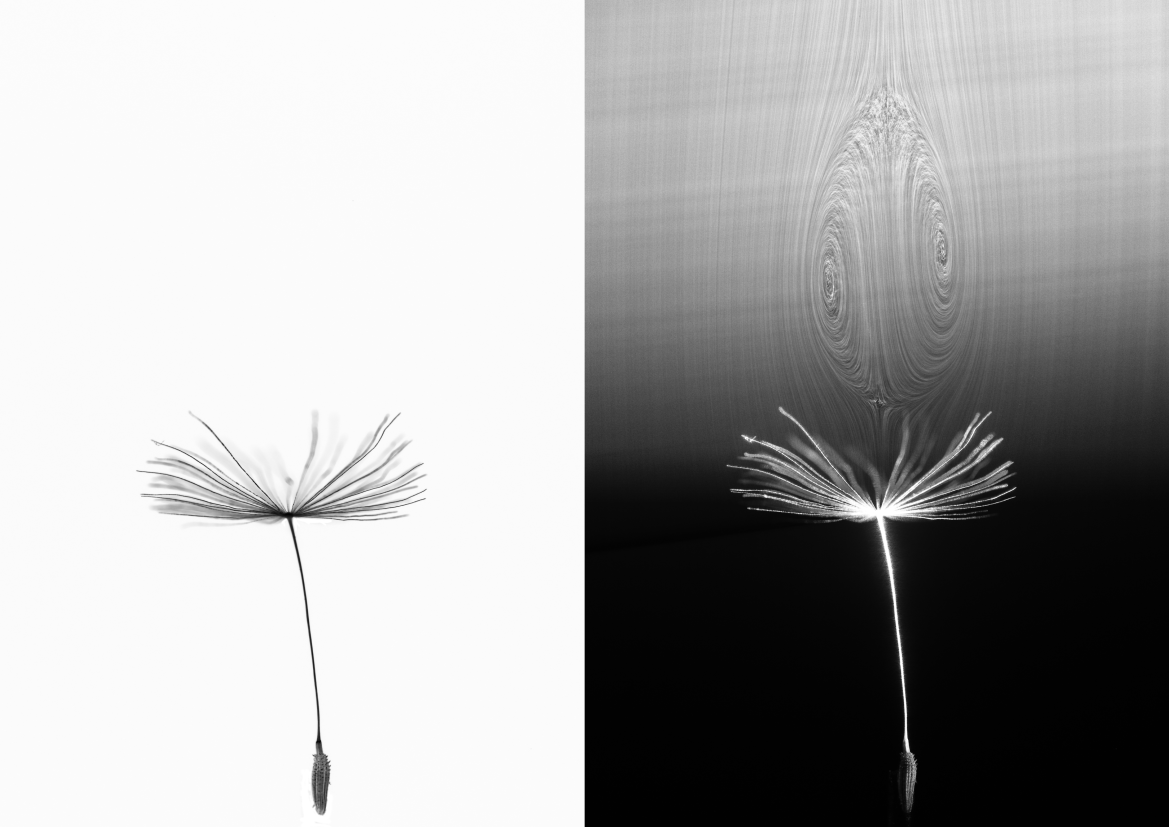
A notable discovery from the group was a previously unknown vortex structure that significantly enhances the flight of dandelion seeds: the separated vortex ring. Discovering a new class of vortex in a mature field such as fluid mechanics is rare. This work was published in Nature, featured by the BBC and The New York Times, highlighted by Sir David Attenborough in The Green Planet, and recognised as a National Geographic Scientific Breakthrough.
Current directions
Current work explores vortex-mediated transport across biological and environmental systems, including the flight dynamics of natural seeds and the mechanisms controlling particle capture and dispersion in complex flows.
Theme B
Interfacial & multiphase flows
We study flows involving drops, bubbles, liquid bridges, and other capillary systems in which interfaces, contact lines, and multiphase interactions play a central role. These systems often exhibit behaviour that runs counter to classical intuition, especially when hysteresis, vibration, or confinement are important.
Liquid bridges and stability
Our work showed that contact angle hysteresis can stabilise liquid bridges that would otherwise be classically unstable, opening new directions in the study of capillary-surface stability.
Uphill-moving droplets
Through asymptotic and reduced-order modelling, we showed how nonlinear interactions between vibration modes can drive droplets uphill against gravity on vibrating substrates.
Sinking bubbles in beer
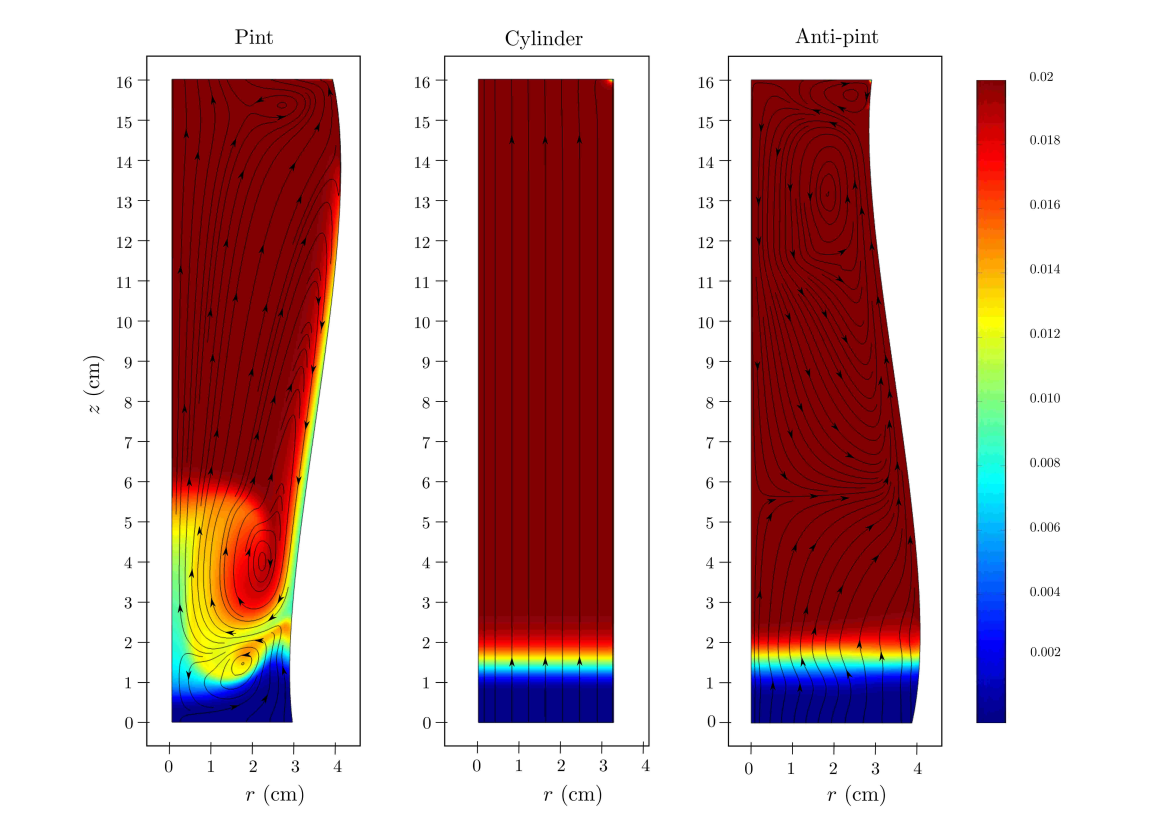
Our work on stout beer explained the famous Guinness bubble paradox: bubbles appear to sink because glass geometry and bubble distribution generate a large-scale recirculating vortex. More broadly, this work illustrates how vortex-dominated multiphase flows can emerge in seemingly everyday settings.
Theme C
Wave–structure interaction and seabed mechanics
A major current focus of the group is the interaction between waves, coastal and offshore structures, and the seabed. We study the mechanisms that lead to wave loading, seabed instability, scour, liquefaction, and structural failure in extreme marine environments.
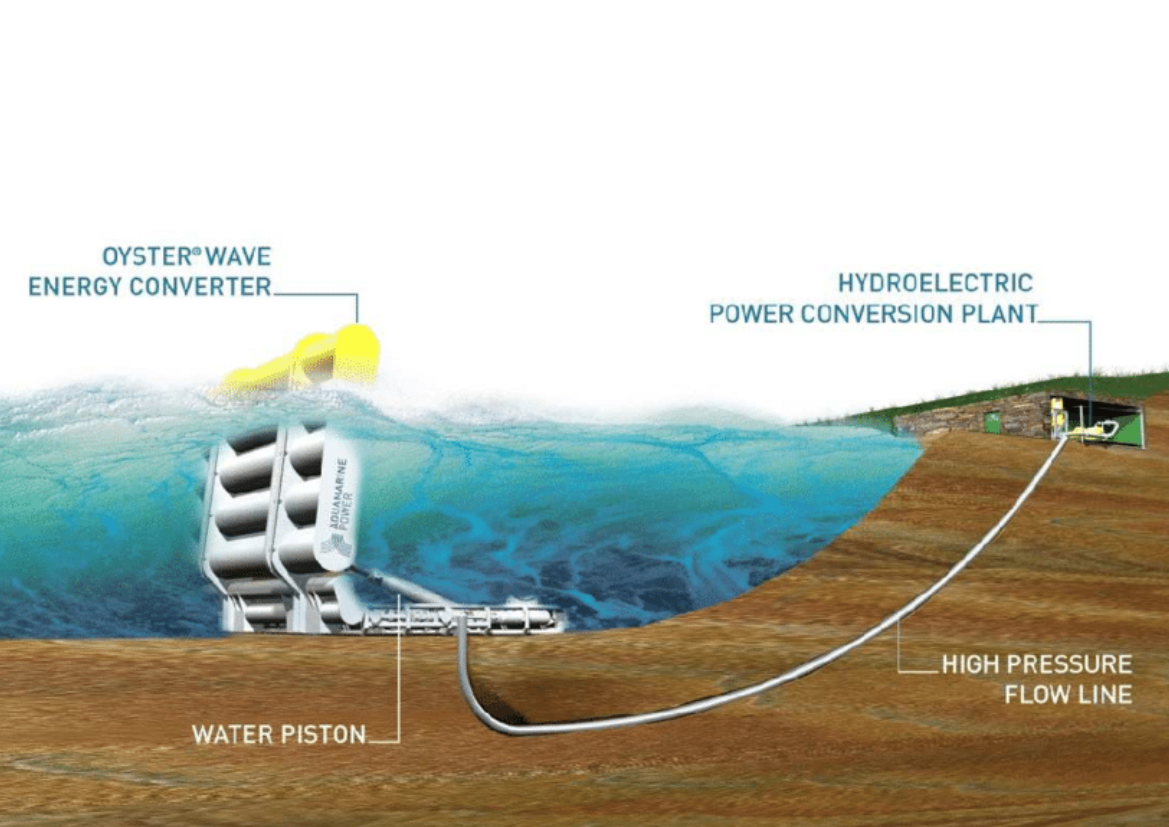
This work combines analytical, numerical, and physical modelling to develop predictive understanding of seabed response and hydrodynamic forcing near breakwaters, monopile foundations, semi-submersible platforms, and wave energy systems.
Recent directions
Recent studies have addressed the spatio-temporal distribution of wave impact loads on semi-submersible platforms, the stability of submarine slopes under storm and cyclic loading, and predictive methods for failure surfaces beneath offshore structures. This work contributes to understanding and modelling in journals such as Ocean Engineering, Applied Ocean Research, and Soil Dynamics and Earthquake Engineering.
Wave energy and coastal systems
Related work examines wave–structure interaction in wave energy devices and coastal systems, including reduced models that capture resonant and viscous mechanisms while remaining computationally tractable.
Theme D
Marine microplastics and particle transport
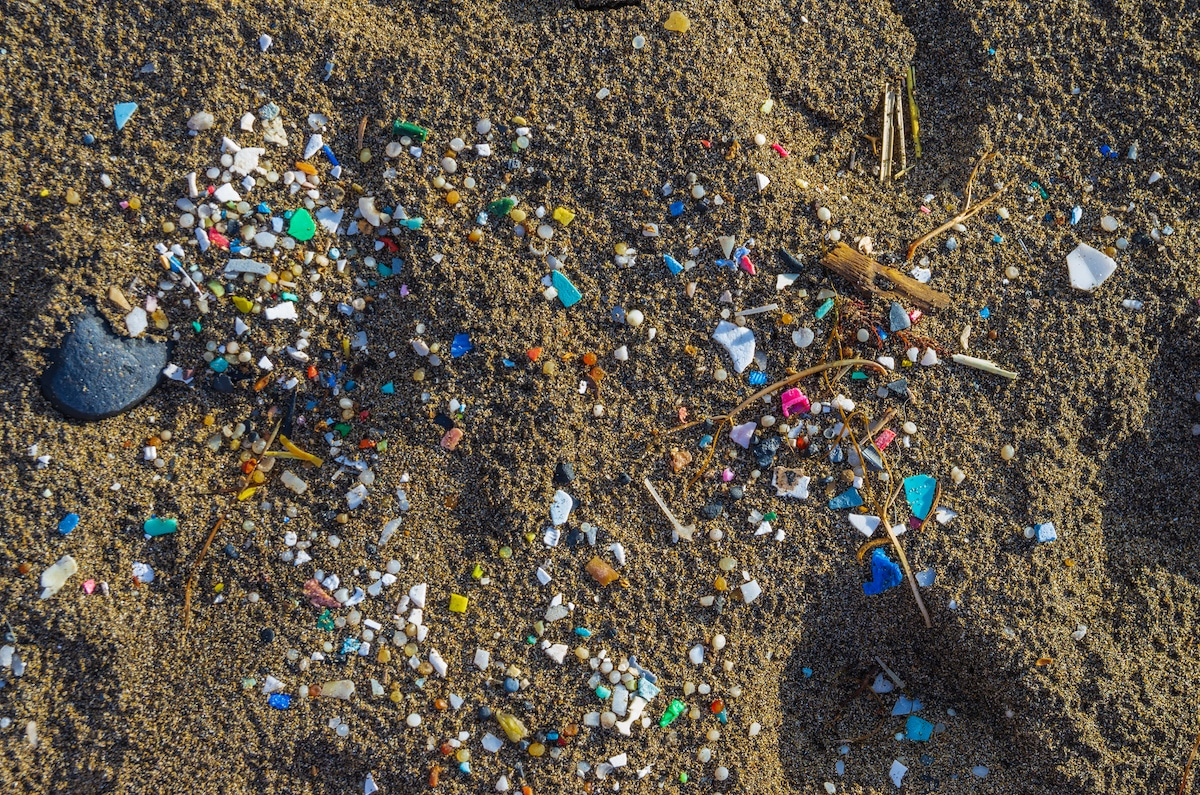
Plastic pollution is one of the defining environmental challenges of our time, yet predicting where microplastics travel — and where they accumulate — remains difficult. We build mathematical models of how ocean waves transport microplastic particles, with the aim of making these predictions more reliable and better able to support environmental monitoring and risk assessment.
Our recent work, led by PhD student Mary Eby, shows that larger microplastic particles effectively carry a "memory" of their past motion: their earlier movement through the water continues to shape where they travel. We identify the conditions under which this effect — described by the Basset–Boussinesq history force — becomes significant enough to matter, giving practical guidance on when it should be included in ocean transport models. The paper was selected as an Editor's Pick in Physics of Fluids.
Current directions
We are extending these methods across a wider range of particle sizes and flow conditions, and developing efficient numerical techniques for the history force so that memory effects can be captured in large-scale transport models. The same mathematical tools apply wherever particles move through complex fluids, from environmental engineering to industrial processes.
Theme E
Fluid mechanics in public health
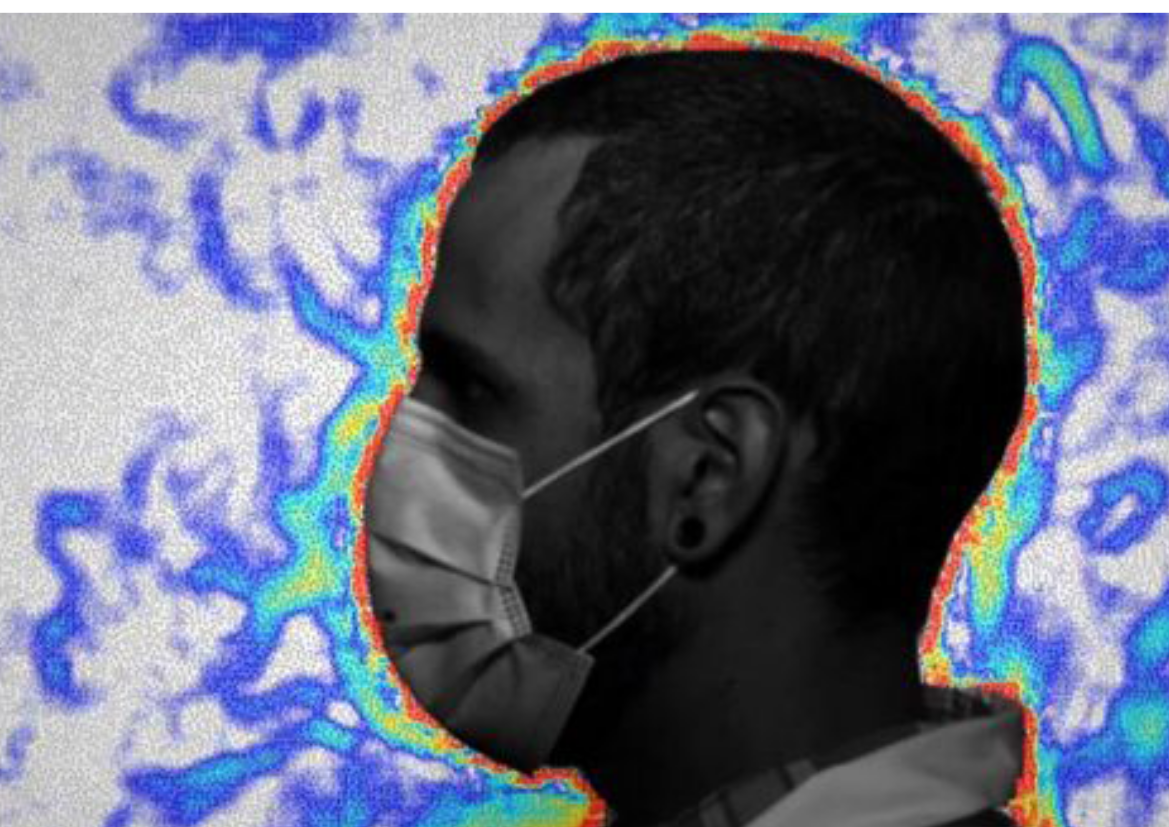
During the COVID-19 pandemic, the group pivoted to problems in respiratory fluid mechanics and airborne transmission. In collaboration with the University of Edinburgh and the NHS, we developed mathematical models and carried out experiments to understand and mitigate the spread of SARS-CoV-2.
This work contributed directly to evidence considered by the UK Government’s Scientific Advisory Group for Emergencies (SAGE), informed public policy on face coverings in public transport, and was covered extensively in the media, including NBC Nightly News.
Broader significance
This strand of work demonstrates how fluid mechanics can make rapid and meaningful contributions beyond the laboratory, particularly when mathematical modelling, experiment, and public-health need intersect.